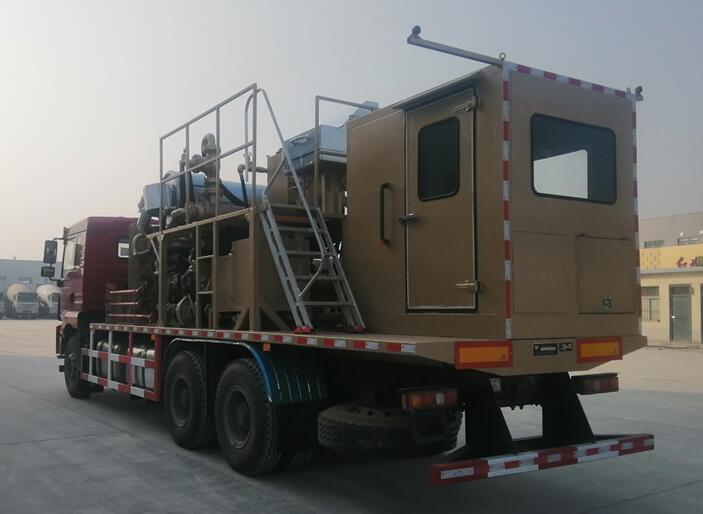
List receiving points separately
Record gas quality, usable flow, required pressure and operating schedule for each receiving connection. Identify which demands can occur together and which are mutually exclusive under the approved project plan. A sum of isolated catalogue capacities does not establish the concurrent requirement. Keep uncertain demand visible as provisional input rather than silently assume that all points share one convenient pressure or timing basis.
Evaluate the governing simultaneous case
Ask the supplier to respond to each accepted combination of demand, including the supporting compressor and any booster. Separate quality-specific production from the capacity available at the receiving boundaries. A package may support several points sequentially but not simultaneously. If the accepted plan relies on reduced demand during a particular event, retain that restriction in both the technical offer and commercial commitment.
Mark the distribution boundary
External manifolds, regulation, isolation, instrumentation and connections need identified design and supply responsibilities. A single truck outlet does not establish an independently controlled supply to every receiving point. Ask the responsible integrator to explain how the proposed arrangement meets the accepted cases. Actual field distribution, pressure-system operation and protection require the appropriate project approval and equipment-specific information rather than informal connection assumptions.
Agree allocation and records
When total availability becomes constrained, the approved project plan must define how competing demand is managed. Procurement should identify the functions the supplier offers and those provided by the site. Ask how delivered quantities and quality status will be distinguished where commercial records require separate accounting. A single aggregate totalizer cannot automatically establish accepted volume at every individual receiving connection.
Review changes and future expansion
Additional points can alter the simultaneous supply requirement even when average demand appears modest. Ask for an expressly supported expansion response rather than assume unused nameplate capacity remains available at all conditions. Compare added generation, boosting and distribution work as complete scopes. Keep any future option distinct from the delivered package so that the current acceptance does not depend on equipment not ordered.
Review asymmetric demand
Different receiving points may require different quality or pressure conditions. Ask the provider which common supply condition is proposed and who owns any further conditioning or pressure adjustment. Do not assume a combined-flow figure resolves these differences. The purchasing response should identify supported combinations and exclusions before a shared generation package is accepted as equivalent to separately supplied nitrogen at every point.
Keep availability claims tied to the accepted combination
The multiwell or multi-point label describes an application arrangement, not a universal performance level. Retain the simultaneous demand matrix, distribution diagram and relevant limits with the order. If a receiving process changes its gas condition or schedule, review the effect before relying on the prior commitment. This makes a shared supply plan auditable without promising that every connected point can draw maximum flow indefinitely.
Put these items side by side in the bid review
| Purchase item | Question to resolve | Evidence to request |
|---|---|---|
| Concurrency | Which demands occur together? | Accepted demand matrix |
| Boundary | Who supplies distribution controls? | Marked scope and interface diagram |
| Accounting | What is measured at each point? | Delivery and reporting arrangement |
Suggested wording for the quotation request
Respond to the attached multi-point nitrogen demand matrix with supported simultaneous quality, flow and pressure cases. Identify generation, boosting, storage and external distribution responsibilities. State any demand priorities, restrictions and measurement limitations for purchaser review. Price expressly supported expansion options separately and distinguish aggregate production records from accepted delivery evidence at individual receiving points.
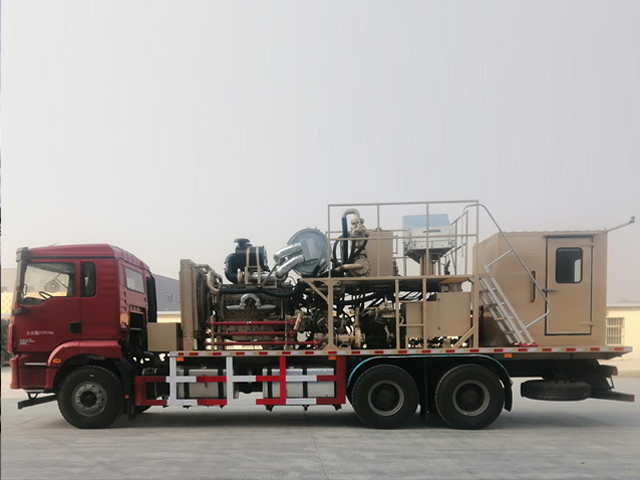
Specify the nitrogen generation truck against accepted gas quality, usable flow, delivery pressure and duration at one identified boundary. Keep the actual feed-air compressor, treatment, separation technology, drive and any booster or buffer in the same review. Record volume reference conditions, environmental assumptions and external responsibilities. Separate catalogue maxima do not establish simultaneous delivery, and a photograph does not identify all included components. On-site generation is not liquid-nitrogen pumping or vaporization. Actual operation, maintenance and gas handling require competent personnel, configuration-specific manufacturer information and approved project procedures.
For the wider equipment scope, consult the Nitrogen Generator to Booster: Matching Supply and Demand. Use the RFQ checklist to collect the supporting documents before requesting a configuration-specific quotation.
Buyer questions
Can sequential multiwell service be assumed simultaneous?
No. Obtain a response for the actual combined demand and supporting distribution arrangement.
Does one aggregate flow meter prove delivery to each receiving point?
No. Individual delivery evidence depends on the accepted measurement and distribution design.
Background and supplier contact
Atlas Copco on-site nitrogen generation background offers related background, not certification of the equipment in a quotation. Applicability must be checked for the project and destination.
Explore the nitrogen generation truck, browse all technical resources, or visit Vance Petroleum for company information. Request a nitrogen-generation-truck proposal with the gas-quality, flow, pressure, operating schedule and destination requirements.